There's a specific kind of frustration that hits you at an airport currency exchange counter. You're tired, just landed in a new country, and the display is showing you a rate that looks nothing like what you checked online before your flight. You convert anyway because you need local cash. Later, you do the math — and realize you just paid a 6% markup on your own money.
Most people plan their flights and hotels down to the minute but give almost no thought to travel money until they're already at the airport. That gap costs real money — sometimes hundreds of dollars on a single trip.
Getting it right doesn't take financial expertise. It takes a bit of preparation, a basic understanding of how currency exchange actually works, and knowing which payment methods to reach for in different situations.
Plan Your Travel Budget Early
The worst time to think about currency is when you're standing in an airport. By then your options are limited and expensive. Start at least two weeks before departure:
Understand Currency Exchange Rates
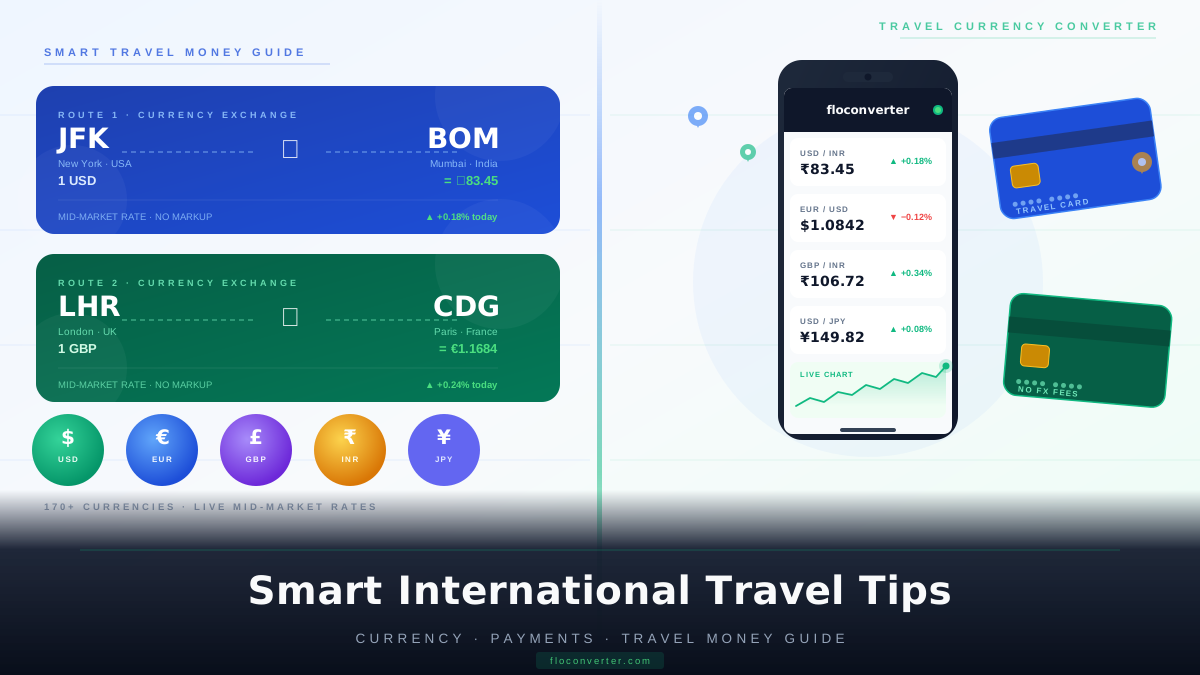
The mid-market rate (also called the interbank rate) is the real benchmark between two currencies — the midpoint between global buy and sell prices in the forex market. This is what floconverter shows, what Google reports, and what financial news references.
When you exchange money at a bank, travel agent, or currency desk, they apply a margin to this rate — typically 2–8% depending on the provider. That margin is their profit. It's not listed as a separate fee; it's simply baked into the worse rate you receive.
The key rule: Always check the mid-market rate first, then evaluate any conversion offer against it. If someone offers you 1 USD = 82.00 INR when the real rate is 83.45, you're losing 1.73% before your trip even starts.
Best Payment Methods for International Travel
There's no single best method for every situation. The smartest travelers use a combination, matched to context.
Cash (Local Currency)
Still essential in most destinations. Small shops, street vendors, markets, taxis, tipping, and areas with unreliable card infrastructure all require cash. Avoid airport desks on arrival — they're the most convenient option and almost always the worst rate.
Travel Cards (Prepaid Multi-Currency)
Cards like Wise and Revolut let you load multiple currencies at or near the mid-market rate. They're excellent for longer trips or travelers visiting several countries. Rates are generally better than banks, fees are transparent.
Credit Cards with No Foreign Transaction Fee
For hotels, restaurants, tours, and larger purchases, a no-FX-fee credit card is one of the most cost-effective payment methods. The trap: dynamic currency conversion (DCC). When a terminal abroad offers to charge you in your home currency, always decline.
Digital Wallets
Apple Pay, Google Pay, and similar wallets are increasingly accepted internationally, particularly across Europe, East Asia, and urban areas globally. They use your underlying card's exchange rate.
Avoid High Currency Exchange Fees
Currency exchange fees come in several forms, and not all of them are labeled as fees. Here's where travelers lose money without realizing it:
Tips for Using Cards Abroad
Check Live Rates Before You Convert
A live currency converter on your phone is one of the most genuinely useful travel tools available — and it costs nothing to use. Check live mid-market rates at floconverter Live Rates before accepting any exchange offer.
Final Thoughts
The difference between a well-prepared traveler and an underprepared one isn't a bigger budget. It's knowing where the money goes, which rates are fair, and which payment methods to use when.
Before your next trip, spend 20 minutes with floconverter: check the live mid-market rate for your destination's currency, look at the 30-day trend, and calculate a realistic daily budget in local terms. That 20 minutes is one of the best investments you can make for the whole trip.